I Sat Down to Play a Game and Found a Meditation on Art and Grief
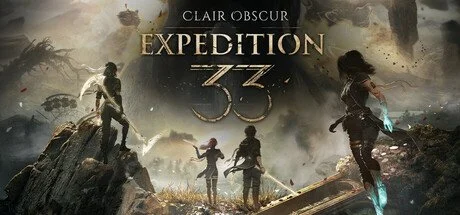
The Unexpected Philosophy of Clair Obscur: Expedition 33
Spoiler-free(ish)
What a strange, reflective and gorgeously realised game Clair Obscur: Expedition 33 is. The Belle Époque-inspired RPG cleaned up at the 2025 Game Awards, and it deserves every win. Although heavily indebted to Japanese RPGs like Final Fantasy, the kitsch and whimsy I associate with the genre are softened by a distinctly French sensibility. The game draws deeply on its country’s art, history and culture, giving the whole thing a melancholy that feels entirely its own. I won’t go into the turn-based gameplay itself. Not because it isn’t creative and rewarding, but because I haven’t played enough games to discuss it with any authority. What I do want to dig into are the two thematic engines that propel the narrative from its opening: art and grief.
We first meet our protagonist, Gustave, walking the love of his life Sophie to the dock of their fractured, sadly beautiful town of Lumière for her ‘gommage’. In the distance, a monstrous, god-like giant known as The Paintress paints a number onto a towering monolith. When she does, everyone whose age corresponds with that number disintegrates into a visually stunning swarm of bright red roses. Each year the number rolls back from 100 and we join the town just as everybody aged 34 disappears. This heartbreaking introduction sets the tone for the adventure; each year a forlorn expedition sails to the monolith in an attempt to end this generational erasure. For the player, that means Gustave, his adopted younger sister Maelle, and a cast of characters each struggling with their own grief go forward into the unknown.
So, grief floods every frame of this game. It is the primary motive for every decision, every interaction and narrative beat. I don’t want to make Clair Obscur sound like it's a chore, or that there aren’t moments of levity and lightness, because that’s not true. The odd characters you meet, and character development between story beats, offer a respite from the melancholy, but it is inescapable; much like grief itself.
The game presents the player with the complicated ways that grief manifests itself. Early on, in a particularly subversive scene, a character briefly holds a gun to his own head in a moment of abject despair. Characters act out in destructive ways, blinded by their own sadness. Some of the most painful parts of the story revolve around characters wanting to do their best for one another, but only succeeding in damaging the situation further. A defining feature of the game is the loss of what could have been. Growth and hope are not linear paths.
I won’t give away any of the major twists in the story, I wouldn’t want to deprive a player of experiencing these shocking moments for themselves. As soon as you think you begin to understand this rich, literate story, something happens that upends everything and you are rewarded with a deeper understanding of this singular world. So, without spoilers, the other primary theme is art; and it is both a celebration and a warning.
Its celebration is in the transformative power of art. It’s hardly an original thought that art helps us process reality, but what is distinctive about Clair Obscur is how powerfully that idea is presented to the player. Much of the story explores how grief can be understood and transformed through art. But it also understands how the breadth of human experience can be represented through it: childhood wonder, naivety, love, pain, friendship and memory are all here.
While art can be a function to help us come to terms with life and loss, Clair Obscur doesn’t shy away from the risks of reliance on it in times of great emotional upheaval. The game warns of losing yourself entirely within the canvas, of losing all perspective on the real world. Art is beautiful, restorative, but hold on to the comfort it offers too tightly and it becomes another way of avoiding the world.
All of this to say that I have rarely seen the cognitive dissonance of art as both a power for good and a dangerous distraction quite as thoughtfully as it is done here. Clair Obscur is complicated. There are no right answers, only different ways of living with loss. What the game understands so elegantly is that art can help us endure grief, but it cannot replace the world we must eventually return to, and nor should it. The human experience, for all its terrible sadness, is also achingly beautiful.